Innovative BLDC Motors for High-Risk Applications in Pulp and Paper Industries

Understanding the Need for BLDC Motors in Hazardous Locations
Characteristics of Hazardous Locations
Pulp and paper plants operate amid explosive mixtures where vapors from chemicals and dusts from wood fibers create constant ignition risks. These hazardous locations demand motors engineered to contain sparks and heat. Hazardous location motors prevent arcs from reaching flammable gas or dust clouds. Operators track motor behavior closely because temperature spikes or friction can trigger disasters in confined spaces.
Facilities classify zones by concentration levels of gas and dusts to select proper equipment. Dimension of enclosures and sealing methods matter when vapors penetrate standard housings. BLDC motors reduce internal sparking compared with brushed designs, lowering ignition potential in these demanding environments. In practice, paper mills encounter mixtures such as turpentine vapors, hydrogen sulfide from kraft pulping, and combustible cellulose dust generated during chipping and drying. These substances fall under Class I Division 1 or 2 and Class II Division 1 or 2 classifications per NEC guidelines, requiring motors whose surface temperatures stay below the auto-ignition points of the surrounding atmosphere.
Importance of Explosion-Proof Motors
Explosion-proof motors protect workers and infrastructure when hazardous locations contain volatile solvents or fine particulates. A single ignition event can halt production for weeks and damage entire lines. Hazardous location motors certified for Class I and II areas contain internal explosions without propagating flames outward.
Plants rely on these motors for continuous operation around gas compressors and pulping equipment. Proper selection avoids costly downtime and meets insurance requirements. Distributors often stock units tested for both gas and dust hazards common in paper mills. Beyond immediate safety, explosion-proof construction supports regulatory compliance with OSHA and NFPA standards, ensuring that insurance premiums remain manageable and that facilities avoid citations during surprise audits. When motors are correctly specified, plants experience fewer environmental releases and maintain steady output even during peak production seasons.
BLDC Motor Advantages Over Traditional Motors
BLDC motors deliver higher efficiency and precise speed control through electronic commutation. They generate less heat than induction motors, reducing surface temperatures that could ignite vapors or dusts. Maintenance intervals lengthen because brushes never wear out.
Force output remains steady across varying loads, supporting consistent paper machine speeds. Warranty periods often exceed those of conventional motors due to fewer mechanical parts. Operators notice quieter performance and lower energy draw in hazardous locations throughout the facility. Typical efficiency gains reach five to ten percentage points over equivalently rated induction motors, translating into measurable reductions in electricity consumption across 24-hour operations. The absence of brushes also eliminates carbon dust generation, a secondary ignition source in dusty environments, while electronic commutation enables soft-start profiles that limit inrush current and mechanical shock during frequent starts common in paper machine sections.
Innovative Features of BLDC Motors for Pulp and Paper Applications
Enhanced Cooling Mechanisms for Cooling Towers
Cooling towers in pulp and paper operations expose motors to high humidity and chemical mists. BLDC motors incorporate sealed designs with integrated heat sinks that maintain safe operating temperatures. These features prevent condensation from reaching windings and causing shorts.
Engineers optimize airflow paths to dissipate heat even when ambient conditions fluctuate. Liquid ingress protection ratings ensure reliability when sprays reach the motor housing. Such innovations extend service life in environments where traditional motors fail prematurely. Many units now feature internal thermal sensors that communicate with variable frequency drives to dynamically adjust cooling fan speeds, preserving energy while keeping winding temperatures within safe margins even during summer heat waves or winter fog events typical at mill sites.
Durability Against Vapors and Liquids
Vapors and liquids from bleaching and washing stages attack motor components daily. BLDC motors use corrosion-resistant coatings and stainless hardware to withstand these exposures. Sealed bearings block moisture entry that would otherwise degrade performance.
Manufacturers test units under continuous liquid spray and vapor saturation to verify integrity. This durability reduces replacement frequency and protects surrounding infrastructure from contamination. Plants gain predictable uptime when motors resist chemical attack. Epoxy or specialized polymer coatings rated for pH extremes between 2 and 12 allow motors to survive prolonged exposure to chlorine dioxide and sodium hydroxide mists without pitting or delamination, while double-sealed, grease-packed bearings maintain lubrication integrity for years rather than months.
Frequency Control for Optimal Performance
Variable frequency drives paired with BLDC motors allow exact speed matching to process demands. Operators adjust frequency to match load changes without wasting energy. This control improves throughput while keeping motor temperatures within safe limits in hazardous locations.
Precise frequency modulation also reduces mechanical stress on connected equipment such as pumps and fans. Data logs from drives reveal performance trends that guide adjustments. The result is smoother operation and extended component life across the production line. In addition, integrated harmonic filters within modern drives minimize electrical noise that could otherwise interfere with nearby process instrumentation, ensuring both motor efficiency and plant-wide electromagnetic compatibility.
Applications of Hazardous Location Motors in the Pulp and Paper Industry
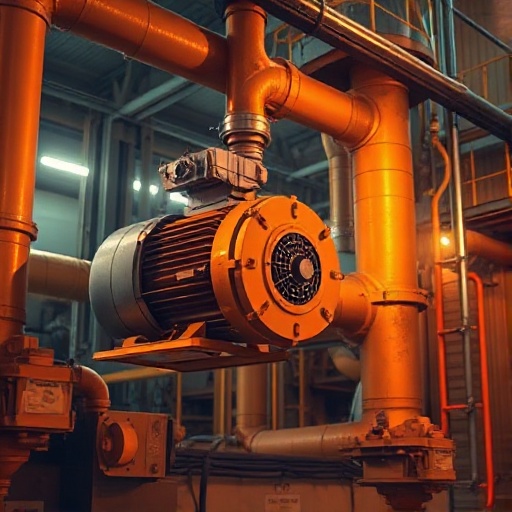
Gas Compressors in Paper Production
Gas compressors handle flammable vapors generated during pulping and recovery processes. Hazardous location motors drive these units without introducing ignition sources. BLDC designs maintain torque under varying pressure conditions common in paper mills.
Facilities install these motors in classified zones where leaks could create explosive atmospheres. Robust enclosures contain any internal fault. Regular inspections confirm continued compliance and safe compressor operation. Because BLDC motors deliver near-constant torque from zero to rated speed, they handle the fluctuating back-pressure events that occur during black-liquor evaporation without the need for oversized induction motors, improving both energy use and process stability.
Motor Use in Dusty Environments
Dusts from chipping, grinding, and drying areas settle on every surface. Hazardous location motors feature tight seals that block fine particles from entering windings. BLDC motors run cooler, limiting dust ignition on hot surfaces.
Paper plants schedule cleaning cycles around motor housings to maintain airflow. These motors support conveyors and fans that move material through dusty zones. Reliability here directly affects overall plant output. In addition, the lower surface temperatures reduce the risk of smoldering dust layers that can accumulate between scheduled cleanings, a common precursor to secondary explosions in wood-processing areas.
Single Phase Motors for Specialized Tasks
Single phase motors handle auxiliary functions such as small pumps and agitators in classified areas. Hazardous location versions incorporate the same explosion-proof construction as larger units. BLDC technology brings efficiency gains even at modest power levels.
Technicians value the compact dimension of single phase motors when space is limited near process equipment. They integrate easily with existing controls and deliver consistent performance. This versatility expands options for upgrading older installations. Many single-phase BLDC units now include built-in power-factor correction, further lowering plant demand charges while preserving the small footprint required in congested bleach-plant or stock-preparation areas.
Safety Standards and Regulations for Hazardous Location Motors
NEMA Ratings Explained
NEMA ratings define enclosure types suitable for hazardous locations. Motors carrying NEMA 7 or 9 designations resist gas or dust ignition. Purchasers verify these markings before installation in pulp and paper facilities.
The rating system guides selection based on specific class and division requirements. Proper NEMA compliance ensures motors withstand internal faults without external flame release. Distributors provide guidance on matching ratings to site conditions. Facilities often cross-reference NEMA types with temperature codes (T1 through T6) to confirm that maximum surface temperatures remain below the ignition thresholds of the specific gases or dusts present.
EASA Guidelines for Motor Safety
EASA guidelines cover repair and maintenance practices that preserve hazardous location motor integrity. Technicians follow strict procedures when rewinding or replacing parts to retain explosion-proof certification. Documentation tracks every service action.
Adherence to EASA recommendations prevents voiding warranties and maintains regulatory approval. Plants schedule periodic audits to confirm ongoing compliance. These steps protect both personnel and production continuity. Detailed service records also support root-cause analysis after any abnormal event, helping mills refine preventive-maintenance intervals and spare-parts strategies.
Compliance with Industrial Safety Standards
Industrial safety standards require motors to undergo third-party testing for hazardous locations. BLDC motors must demonstrate containment of ignition sources under worst-case conditions. Certification bodies issue reports that plants retain for inspections.
Compliance covers installation, grounding, and wiring practices specific to classified areas. Regular training updates staff on evolving requirements. Facilities that prioritize these standards experience fewer incidents and smoother audits. Many mills now incorporate motor health data into their process-safety management systems, creating a continuous feedback loop between maintenance records and hazard analyses.
Future Trends in BLDC Motors for High-Risk Environments

Data-Driven Insights for Motor Performance
Sensors embedded in BLDC motors stream performance data to centralized systems. Analysts review vibration, temperature, and current patterns to predict failures before they occur. This approach minimizes unplanned stops in hazardous locations.
Data centers supporting plant operations process these streams in real time. Operators adjust parameters based on insights to optimize efficiency. Predictive strategies reduce repair costs and extend motor life across the facility. Advanced analytics platforms can correlate motor data with process variables such as stock consistency or dryer hood temperatures, revealing optimization opportunities that improve both safety margins and production rates.
Innovations in Repair and Maintenance
Modular BLDC designs simplify repair by allowing quick module swaps without full disassembly. Technicians use diagnostic tools to isolate issues rapidly in hazardous location motors. Updated repair kits maintain original safety certifications.
Distributors stock common components to shorten turnaround times. Training programs emphasize safe handling practices during maintenance. These innovations keep production lines running with minimal interruption. Some manufacturers now offer certified exchange programs that replace an entire motor module in under four hours while preserving the original explosion-proof rating.
Sustainable Practices in Motor Manufacturing
Manufacturers adopt recycled materials and energy-efficient processes when building BLDC motors. Reduced material waste lowers the environmental footprint of pulp and paper infrastructure. Longer motor life decreases replacement frequency and associated resource use.
Sustainability extends to packaging and shipping practices that cut carbon output. Plants benefit from lower operating costs while meeting corporate responsibility goals. Future models will further integrate these principles into hazardous location motor production. Life-cycle assessments increasingly guide material choices, favoring copper alloys with higher recycled content and insulation systems free of halogenated flame retardants, aligning motor design with mill sustainability targets.